by ropeway-admin | Apr 30, 2026 | Manufacturing
Moving raw materials across mountains, rivers, gorges, and remote terrain is one of the biggest logistical challenges that heavy industries face all the time. Here, trucks seem like the obvious answer until you realize they need roads. But roads need forests cleared, ecosystems disturbed, and constant upkeep that never really ends. And if the monsoon season or a snowstorm hits, then the whole supply chain simply stops.
But an industrial ropeway system changes this equation. How? By lifting material transport above the ground. The plus point is that ropeways bypass the need for a road network and cut out diesel-heavy hauling. However, they run on electricity, which is being supplied by renewable sources at an increasing rate.
The result? A modern transportation solution. That is faster, cleaner, and purpose-built. Hence, the shift to aerial transport is a smart and environmentally friendly move. Especially for industries operating across mining, hydropower, tea, agriculture, and defence, where geography is non-negotiable.
Ropeways vs. Trucks: What the Numbers Actually Show
A diesel truck emits roughly 120–150 grams of CO₂ per tonne-kilometer. An electrically powered ropeway? Between 5 and 20 grams. That is not a marginal difference. What is this really? A near-complete elimination of transport emissions over the same route.
A single ropeway tower occupies less than 2 square meters of ground. A road carrying the same load clears 8 to 12 meters of width, continuously, across every kilometer it covers.
Industries that have made the switch report operating cost reductions of 40–60% on material transport alone. And a well-built ropeway runs for 25 to 40 years, leaving the ground beneath it completely untouched throughout.
Why Ropeways Are Eco-Friendly: The Engineering Case
The question of why ropeways are eco-friendly has a concrete engineering answer. Here is what the technology actually delivers:
- Zero Road Construction: Aerial ropeways can cross over rivers, deep valleys, and steep hills without breaking a square foot of land. By avoiding the need for roads at all. This prevents soil erosion and damage from runoff, as well as deforestation.
- Electric-Powered Operation: Ropeways are operated using electricity. They can also link the material transport chain to clean energy sources, such as solar, hydropower, and wind. That makes it nearly carbon neutral.
- Low Emissions Per Tonne-Kilometre: When comparing aerial ropeway systems to truck-based road transport over the same distance. Then, Life Cycle Assessment (LCA) studies reveal that the former produces much lower carbon emissions.
- Minimal Land Footprint: The space occupied by the ropeway tower foundations is much less than that of a road. This directly means that the subsurface remains completely unchanged, so its natural topography, native vegetation, and drainage remain undisturbed.
- Reduced Noise and Air Pollution: The cableway material handling system runs much more silently, without exhaust emissions. That helps reduce air pollution and noise versus convoy trucks. Especially important in sensitive areas of the environment or close to humans.
- Reduced Resource Consumption and Waste: A well-designed ropeway can last 20–40 years on a known maintenance schedule, avoiding frequent fleet replacement.
Key Benefits of Ropeway Transport for Industries
The benefits of ropeway transport for industries go beyond environmental impact. The operational advantages are equally compelling:
| Benefit |
What It Means for Your Industry |
| Continuous Operation |
24/7 material flow without driver shift limits or road restrictions |
| Terrain Independence |
Crosses valleys, rivers, gorges, and steep gradients that trucks cannot navigate |
| Low Operating Cost |
Fewer mechanical parts than a truck fleet; predictable, planned servicing |
| High Payload Capacity |
Systems handle from 500 kg to 10,000 kg or more per carrier |
| All-Weather Resilience |
Engineered to operate in high winds, sub-zero temperatures, and heavy snowfall |
| Faster Project Timelines |
Continuous aerial delivery accelerates construction and mining schedules |
| Lower Carbon Footprint |
Electric drive, no exhaust, minimal land use & built for sustainability targets |
Where Industrial Cable Transport Systems Have a Significant Impact
Mining Ropeway Transport
In mountainous mining regions, ore sits deep inside the mountain while processing facilities are in the valley, and no viable road exists between them. Whereas mining ropeway transport directly fills this gap. Bulk minerals are transacted nonstop between points of extraction, through aerial carriers to hub processing centres. This avoids costly road haulage with equipment wear and ensures supply flow in inclement weather or ongoing seasonal closures.
Hydropower and Dam Construction
Hydropower construction sites are often found deep in river valleys with mountains that are too steep to cut paths through. A cableway material handling system carts cement, reinforced steel, shutters, and heavy machinery right across the valley. This is often over a kilometre or more. The system is more cost-effective and quicker than any road-based option and avoids the ecological disruption of access on valley floors.
Tea Estates and Agricultural Transport
For tea estates carved into steep hillsides, taking freshly plucked leaves down to processing factories is a daily, labour-intensive trial. But a material ropeway system automates the movement of this. By optimising the time between harvest and processing, reducing strain on workers, and ensuring quality in tea by facilitating timely turnarounds.
Defence and High-Altitude Supply
In military high-altitude deployments, where roads are both absent and enemy fire will make them reliable only in terms of delivering the ‘junk’, aerial cableways provide an under-the-radar supply line. How? With food or ammunition from one end of the town to the other and construction materials transported by cable. They are also used for casualty transport in areas where ground access is impossible. Therefore, they are a key element for military logistics in extreme environments.
How an Aerial Ropeway Material Transport System Works
The system is simpler than most people expect. Carriers like buckets, open platforms, or enclosed cabins hang from a rope stretched between two terminal stations. This is held up along the way by a series of towers. A drive unit at one end powers the haul rope, and the carriers start moving, either continuously or in timed cycles, depending on what the operation needs.
What makes it flexible is how it is configured. Lighter loads, shorter distances, and flat terrain are ideal for monocable systems. This employs a single continuous rope for both support and movement. In a bicable system, the two roles are divided into separate ropes that are designed for specific purposes, such as carrying heavier loads, spanning greater distances, or enduring more extreme wind or gradient conditions.
Both configurations can be customised to the exact demands of a site, whether that means adjusting speed, payload capacity, span length, or gradient angles. And through all of it, the ground below stays completely untouched.
What to Look For in an Industrial Ropeway Partner
A ropeway is far above a short-term purchase. It is infrastructure that will run for decades, across terrain that leaves no room for engineering shortcuts. Hence, selecting an ideal partner from the start impacts more than most industries realize. So, you should look for:
- OITAF-compliant engineering
- In-house manufacturing
- ISO certification
- End-to-end service support
- Proven track record in extreme conditions
Here, M&M Ropeways, as a trusted ropeway manufacturer in India, checks every one of those boxes. Along with 35 years of experience, installations at 18,000 feet on the Siachen Glacier for the Indian Army. Furthermore, M&M Ropeways boasts a high payload capacity, ranging from 100 kg to over 10,000 kg.
M&M Ropeways also handled some of the most demanding projects in the world. From mining and hydropower to tea estates and defense, the expertise is real and field-proven.
The Bottom Line
So, wrapping it all up, industries that moved early on sustainability did not do it because regulations forced them. They did it because the numbers made an impact. Lower emissions, lower operating costs, zero road dependency, and a lifespan that stretches across decades. The case builds itself. The terrain is not going to get easier. Environmental regulations are not going to loosen. A well-engineered ropeway system does not just solve a logistics problem. It removes an entire category of operational risk, permanently.
However, if your industry involves difficult terrain, high material volumes, or a genuine need to cut your carbon footprint, this is worth a serious conversation.
Reach out to M & M Ropeways, a reliable ropeway partner in India, today. And get honest engineering expertise applied to your specific challenge.
by ropeway-admin | Apr 17, 2026 | Manufacturing
The world needs more mountain energy infrastructure because the demand for it keeps rising. Countries need to spend large amounts of money. The reason is that they want to develop hydropower systems, renewable energy power plants, and high-altitude power transmission networks. These projects are performed in distant mountain areas. Rivers, steep slopes, and deep valleys create suitable conditions for generating electricity.
Both governments and private companies are constructing additional power plants to satisfy increasing electricity requirements. Mountain infrastructure now uses ropeways as an essential system. This enables the transport of construction materials and equipment to remote, hard-to-access areas.
In this guide, we will explore in detail why ropeways are becoming essential in mountain-based energy infrastructure and how they support project development in challenging terrain. Stay with us until the end to understand their growing importance.
Mountain Energy Projects: Logistics and Transportation Challenges
Mountain energy projects face severe challenges that hinder smooth processes and material transportation. Mountain infrastructure development faces major construction difficulties. Steep slopes, unstable terrain, and deep valleys create hindrances. These conditions make it difficult to move materials and maintain safe working environments.
Transportation also becomes complicated because many project sites lack proper road connectivity. Heavy machinery, steel components, and construction materials must travel through narrow and difficult routes. These limitations increase logistics in mountainous terrain and raise overall project costs. Ropeways make transportation easier in mountain regions. They allow construction teams to reach remote project sites and move materials safely to locations.
Primary Challenges in Mountain Construction Projects:
- Limited road accessibility.
- Strict environmental compliance rules.
- Rugged mountain slopes and cliffs.
- Heavy equipment transportation.
- Worker safety issues.
How Ropeways Improve Safety and Efficiency in Construction?
The construction projects in the mountains gain both better security and higher functional efficiency. Because ropeways reduce their need for dangerous road transportation. The transportation of heavy materials across steep, unstable roads results in higher accident rates and equipment destruction. The ropeway systems help material transportation across challenging terrain. As a result, this enhances safety and project management. The workers can access various construction sites more quickly through these systems. The construction teams in mountain areas work more effectively because continuous material movement at project sites provides them with essential supplies.
Safety Benefits in Mountain Construction:
The following points explain how ropeway systems improve safety during construction and infrastructure development in mountainous regions.
#1. Reduced Road Accidents
Mountain construction sites need trucks to drive on steep, unstable, and narrow roads. The routes create an increased possibility of vehicle rollovers, landslides, and delays in transportation. Mountainous areas require ropeways, which perform to their fullest capacity because these systems reduce all potential dangers. Aerial cable routes provide safer transportation for construction materials compared to dangerous mountain roads.
#2. Safer Worker Transport
The process of transferring construction workers through different work sites located in mountainous regions requires excessive time because of their dangerous nature. The advanced aerial ropeway systems that exist today enable safer personnel transportation through steep slopes and valley areas. The system enables workers to reach project sites at a quicker pace while decreasing their contact with dangerous travel paths.
#3. Less Exposure to Hazardous Terrain
Mountain construction sites face challenges from three main factors, which include loose rocks, unstable ground, and extreme weather conditions. Material handling ropeways allow equipment and construction materials to move above dangerous terrain. The system decreases manual load movement requirements in dangerous locations while enhancing project site safety.
Stop struggling with mountain roads. Start moving with precision. Whether it is heavy material hauling or complex cable car installations, M & M Ropeways delivered where others can’t.
M & M Ropeways: Reliable Solutions For Mountain Infrastructure
M & M Ropeways has established itself as a dependable company that specializes in ropeway technology and mountain transportation solutions. The company develops and implements advanced ropeway systems, which stimulate infrastructure projects to succeed in challenging mountainous landscapes.
M & M Ropeways applies its extensive industry knowledge to create dependable systems that optimize transportation operations in remote construction sites. The company delivers specialized ropeway engineering solutions that support infrastructure development work in mountainous areas. Our company designs ropeway systems that operate in hydropower projects, dam construction projects, pipeline installation projects, and various mountain infrastructure endeavors. Their expertise promotes safe and efficient transportation of materials across challenging landscapes, which large infrastructure projects require.
Our Ropeway Solutions:
- Material Handling Ropeways – Material handling ropeways help transport construction materials, equipment, and supplies across difficult mountain terrain. These systems provide major ropeway transport advantages by enabling continuous and efficient movement of materials without relying on complex road networks.
- Cable Cranes For Hydropower – This system is widely used in ropeway systems in hydropower projects. Cable cranes move heavy equipment, concrete, and structural materials across valleys and steep slopes. Also, these systems improve construction efficiency and support safe logistics during dam and power plant development.
- Ropeways for Dam Construction – Ropeways function as essential components for dam construction. This facilitates the delivery of steel materials, cement, and machinery to isolated work areas. The system allows eco-friendly material transportation because it decreases the requirement for extensive road building through delicate mountain regions.
- Pipeline and Bridge Construction Logistics – Ropeways provide reliable transport support for ropeways for pipeline construction and bridge development projects. Engineers use these systems to transport heavy materials over rivers and valleys and rugged landscapes that do not allow traditional transport methods.
Contact M & M Ropeways today to discuss how our ropeway solutions can support your next mountain infrastructure project.
Why Industry Leaders Trust M & M Ropeways?
Industry leaders trust M & M Ropeways for their experience in delivering reliable transport systems for challenging infrastructure projects. The company provides efficient solutions that help ensure safe and continuous material transport through hazardous mountainous terrains. Their systems perform successfully as ropeways for remote construction sites, where traditional transportation methods often fail. Our engineering team creates advanced ropeway systems that can transport heavy materials through difficult terrain. All these capabilities make the company a trusted partner for large infrastructure and energy development projects.
Why choose M & M Ropeways
- Customized ropeway solutions
- High-performance ropeway systems
- Cost-effective logistics solutions
- Proven experience in mountain infrastructure projects.
When traditional transport fails, industry leaders turn to M & M Ropeways. Our 20+ years of expertise in delivering high-performance, customized ropeway systems ensure your project never stops. Ready to secure your energy infrastructure? Consult Our Engineering Team Today.
Wrapping Up
Above, we clearly see why Ropeways Are Becoming Essential in Mountain-Based Energy Infrastructure. Energy developers are continuously expanding projects in remote and difficult terrain. Modern ropeways in mountain infrastructure provide efficient transport solutions. The systems deliver project benefits by enhancing work efficiency while decreasing both delays and working difficulties. This is the reason why ropeway systems become an integral solution for future infrastructure projects in mountainous regions.
When it comes to high-altitude energy projects, compromise is not an option. M & M Ropeways provides the best-in-class ropeway systems, engineered for maximum load and extreme durability. Partner with the best company to elevate your infrastructure. Contact M&M Ropeways Now.
by ropeway-admin | Apr 8, 2026 | Manufacturing
Hydropower construction sites are often located in challenging areas, and that makes road-based transportation both slow and hazardous. The role of ropeway systems becomes essential in such conditions. Ropeway systems for hydropower material transport allow movement across rivers, valleys, and steep slopes without needing road access. The ropeway system provides hydropower sites with effective material handling through its direct point-to-point delivery system. This works continuously while reducing project delays, transport expenses, enhancing safety, and lowering environmental damage.
Let us take a closer look at the Role of Ropeway Systems in Transporting Materials for Hydropower Sites and how these systems support construction in difficult terrain.
Why Do Hydropower Sites Face Serious Transportation Challenges?
Hydropower projects need to be situated in locations where sufficient water resources exist. The process of moving materials to these sites needs both strategic preparation and reliable functioning systems. The construction zone does not have direct road access for most of the time. The process of building new roads requires extended time periods because this may not remain stable due to soil conditions or water flow. At remote construction sites, even minor weather changes can stop transport activities for days. The following factors explain why transportation becomes challenging at hydropower construction sites:
Key Material Transport Challenges at Hydropower Sites:
- Steep slopes and deep valleys restrict vehicle movement.
- Limited or no road access to project locations.
- Temporary roads are costly to build and maintain.
- Higher risk to workers and equipment.
These challenges clearly show that standard roads are not enough. Yes, hydropower projects need a specialized ropeway system that is built to handle such tough terrains safely and reliably.
Types of Construction Materials Transported Using Ropeway Systems For Hydropower Projects
The primary advantage of a ropeway system lies in its capacity to transport various construction materials needed for hydropower project sites. Designed for heavy material transportation, ropeway systems handle both routine supplies and oversized loads with ease, even in difficult terrain. The following are the types of materials transport ropeways systems:
- Cement and Aggregates – Ropeways are used to transport cement bags, sand, gravel, and crushed stone materials. The system provides an ongoing supply of materials needed in concrete production, which eliminates work delays at both the dam site and the powerhouse area.
- Heavy Machinery Parts – Transportation systems achieve efficient movement of large components that include turbines, gates, and mechanical assemblies. Ropeways decrease the dangers that come with transporting oversized equipment through roadways.
- Pipes and Penstock Sections – Long and heavy penstock sections are used in water flow systems. These are commonly moved using ropeways, especially in narrow valleys and high-altitude zones.
- Steel Structures and Rods – Ropeways enable safe transport over steep slopes through their long-distance movement capabilities. The system transports steel beams and structural components without any material bending or damage.
- Tools and Construction Equipment – Ropeway systems transported the daily-use tools, machinery, and spare parts quickly. Ensuring smooth project execution without delays.
The ropeway system for construction materials serves as the essential component that supports hydropower development projects. The system enables construction sites to serve efficiently while maintaining safety standards and completing work according to predetermined project timelines.
Key Advantages of Ropeway Systems For Hydropower Projects
Ropeway systems offer multiple advantages that directly support the complex needs of hydropower construction. This addresses different challenges by delivering cost-effective transport systems along with an enhanced, safe material transportation system and eco-friendly transport for hydropower projects. Now let’s move on to the key advantages:
#1. Time Efficiency and Productivity
Ropeway systems function as an efficient transport system. This operates continuously without interruptions caused by terrain or road conditions. Also, the installation of the system establishes a permanent movement schedule that allows materials to move continuously towards the construction site. The system provides faster material delivery, especially during important stages of the project.
Key Benefits Include:
- Continuous, uninterrupted operation.
- Reduced worker idle time.
- Improved site coordination.
- Faster task completion.
#2. Cost Effectiveness in Long-Term Projects
Hydropower projects that require extended time periods, such as ropeways, prove to be a cost-effective solution. This system decreases fuel requirements for transportation. Also, it provides savings by not needing to build and fix temporary roads. Over time, this leads to noticeable reductions in construction costs.
Cost-Related Advantages Include:
- Lower fuel consumption.
- Minimal maintenance costs.
- Reduced labor expenses.
- Fewer project overruns.
#3. Access To Remote and Inaccessible Locations
Hydropower sites need to be situated in areas that lack existing developed infrastructure. Ropeway functions as a dependable remote area transport solution by moving materials over rivers, valleys, and steep slopes. The system manages difficult terrain logistics by maintaining the original natural appearance of the area.
Access Benefits Include:
- Reliable remote connectivity.
- Smooth mountain transport.
- No road dependency.
- Direct site access.
#4. Safety Improvements at Construction Sites
Ropeway systems support safe material transportation. This decreases the need for manual work and vehicle movement on unstable ground. Also, the system design improves construction site safety and lowers the risk of accidents involving workers or equipment.
Safety Advantages Include:
- Fewer vehicle accidents.
- Controlled load handling.
- Safer work environment.
- Improved worker protection.
#5. Environmental Benefits of Ropeway Transport
Ropeway systems work as an eco-friendly transport system. These operate above the ground and require very little land disturbance. Unlike roads, ropeways do not need large-scale cutting of hills. Also, they reduce the need for clearing of forests, soil excavation, and water bodies around hydropower sites. The ropeway system helps preserve the natural landscape around hydropower sites.
Environmental Benefits Include:
- Minimal land disturbance.
- Reduced ecological damage.
- Lower carbon emissions.
- Protected local ecosystems.
These advantages make ropeway systems a smart and sustainable choice for hydropower projects operating in challenging environments.
Why waste millions on temporary roads that wash away? In high-altitude construction, safety is non-negotiable. M & M Ropeways designs heavy-duty cable ropeway systems that operate in weather conditions where trucks simply can’t. Cut your transport time by up to 70% with our proven material handling ropeways.
M & M Ropeways: Supporting Material Transport in Hydropower Projects
M & M Ropeways provides essential support to hydropower projects that operate in remote and challenging terrains. Our company specializes in developing ropeway systems for hydropower. Also, we help ensure safe and reliable movement of construction materials where road access is limited. With strong expertise in material ropeway transport, M & M Ropeways delivers customized solutions that support continuous supply, reduce delays, and improve site efficiency. Our ropeway system functions as an efficient transport system that allows hydropower projects to progress by managing complex terrain conditions in an effective manner.
How M & M Ropeways Adds Value To Hydropower Projects:
- Customized ropeway solutions for complex site conditions.
- Handle steep slopes and deep valleys.
- M & M Ropeways helps reduce overall transport costs and project delays.
- Minimizes dependency on road-based transport systems.
- Improves safety by reducing manual handling and vehicle movement.
- Built with a strong focus on quality engineering and reliable performance.
- Enable continuous material supply to maintain steady construction progress.
Reduce project delays and transport costs by switching to M & M Ropeways. We are the most reliable company and offer safe aerial ropeway transport systems. Contact our experts, and we will ensure continuous material transportation for hydropower sites.
Final Thoughts
The role of ropeway systems for hydropower sites has become increasingly crucial. The reason is that projects move into more remote and challenging locations. This helps reduce transport delays, improve site coordination, and maintain steady construction progress without heavy dependence on roads. With proven expertise in industrial ropeway solutions, M & M Ropeways continues to support hydropower projects. We deliver reliable, terrain-ready material transport systems that are designed for complex site conditions.
by ropeway-admin | Apr 6, 2026 | Manufacturing
The first construction step of any project begins with road construction. The construction process faces challenges when the existing terrain does not support development. The deep Himalayan gorges and hydroelectric dam sites with their steep cliffs create a complete barrier that prevents conventional trucks and excavators from accessing these areas.
Conventional logistics systems reach their limits at this point, and innovative solutions begin to emerge. Therefore, Aerial Ropeways in Construction have become essential infrastructure elements for industrial operations that occur in extremely challenging environments on the entire planet.
Read on to see how the technology works, where it’s solving on-ground problems, and what you should look for if you’re considering one for your site.
Why Difficult Terrains Need Smarter Logistics: An Introduction
Not all construction sites are created equal. Some involve slopes so steep that vehicles cannot climb them. Others sit across river gorges where bridging costs more than the project itself. In India, these conditions define entire regions. Himachal Pradesh. Uttarakhand. Arunachal Pradesh. Sikkim. The Western Ghats. These are zones where infrastructure projects are desperately needed but brutally hard to execute.
Building a road to a remote dam site in such terrain can cost approximately ₹15–25 crore per kilometer. This is highly expensive, plus the road takes months to build. It washes out every monsoon and requires constant maintenance. And even when it is ready, it limits the size and weight of the equipment you can move.
Now you get the answer to why material transport ropeway systems for remote construction have become the default solution for projects in these regions. Let’s move on to the next discussion on how the mechanism of aerial ropeways works.
How Aerial Ropeways and Cable Cranes Work on Tough Construction Sites
The principle goes as follows:
The system uses multiple anchor points to support steel cables, which extend across the valley and gorge and the slope that connects the two endpoints of the system. A trolley or carriage moves along these cables, carrying loads suspended beneath it.
The system works in two main configurations for construction use
- Cable cranes: A cable crane is essentially a heavy-lift system suspended in the air. They are used at dam sites to carry concrete buckets directly to the pouring block. They position penstock sections. They lower the turbine assemblies into place. A cable crane can handle payloads from 10 to 50 tons with pinpoint accuracy.
- Material handling ropeway systems move materials continuously from point to point. Cable cranes place them exactly where the work is happening. Both are forms of aerial ropeways in construction, but their roles are distinct. Material handling ropeways are built for continuous, high-volume transport. The system transports cement, aggregates, steel bars, sand, fuel drums, and construction equipment between the base camp and the work site.
Both systems are engineered to match the terrain, the load type, and the project schedule. M&M Ropeways cable cranes for dam construction have been doing exactly this for 35 years.
Once you understand the behind-the-scenes mechanisms and engineering, you want to take an idea of its application, so let’s focus on the application of the most used material handling ropeway systems.
Where Are Material Handling Ropeways Used in Construction?
Hydropower and Dam Projects
Hydropower sites are almost always remote. They sit in river valleys surrounded by steep terrain. Cable crane manufacturers India solve the core challenge here: moving concrete from the batching plant to the dam face, continuously and at scale. Every cubic meter of concrete placed in the dam body passes through the crane system. There are no intermediate transfers, no waiting for trucks, and no weather delays holding up the pour.
Tunneling Projects
Tunnel construction requires simultaneous material flow in both directions. Supplies go in. Muck and excavated rock come out. A well-designed ropeway system handles both, keeping the tunnel face continuously supplied and the spoil removal on schedule.
Pipeline Construction in Mountains
Pipelines require special construction methods for their installation through mountain regions. The pipeline route follows the contour of the land. Workers and materials need to reach specific GPS coordinates on a hillside where no vehicle can go. Material transport ropeway systems deliver welding equipment, pipe sections, fuel, and worker supplies directly to each work zone along the route. Pipeline projects in Alaska, the Andes, and India’s Northeast have all relied on this method.
Bridge and Viaduct Projects
Constructing a bridge over a gorge requires workers to operate at heights that become inaccessible when scaffolding cannot be built from the ground, and its installation costs become unmanageable. The project uses ropeways to deliver steel beams, concrete segments, and reinforcement cages to the construction deck.
5 Reasons Construction Teams Prefer Aerial Ropeways in Construction Over Roads
When project managers compare logistics options for difficult terrain sites, the decision often comes down to a simple question: build a road or install a ropeway? The answer is given with the following reasons.
- Cost Efficiency: Material handling ropeway systems require only anchor foundations and cable infrastructure. Operating costs are lower, too.
- Speed of Installation: Material handling ropeways for remote construction sites can be installed and commissioned in weeks.
- Safety: The use of ropeways provides workers at ground level with protection against floods and landslides, rockfalls, and accidents involving heavy vehicles that occur on narrow mountain roads. The risk profile of the entire project improves.
- All-Weather Operation: Mountain roads wash out in the monsoon season. Snow blocks them in winter. Material transport ropeway remote construction systems run through all of it.
- Minimal Environmental Footprint: A ropeway does not require land clearing, deforestation, or hillside blasting. The ecological disturbance is limited to tower foundation points.
Why M&M Ropeways is the Preferred Ropeway Manufacturer India for Infrastructure Projects
Choosing the right engineering partner is just as critical as the technology itself. As a leading ropeway manufacturer India for infrastructure projects, we combine local terrain knowledge with global engineering standards.
Here is what defines our technical edge:
- Comprehensive Safety Protocols: Our safety standards include multiple diesel engine backup systems and dedicated rescue trolleys, which maintain safety during both power outages and emergency situations.
- End-to-End Execution: Our company provides complete project management, which starts with topographical mapping and feasibility studies and continues until we deliver staff training and after-sales support.
- The “Make in India” Advantage: All system components undergo complete design and production, and assembly processes, which take place exclusively in India. This ensures full compliance with ISO 9001:2015 and ISO 14001:2015 standards..
The Final Verdict
The success of a construction project in difficult terrain is rarely decided by the quality of the concrete alone. As we have discussed, Aerial Ropeways in Construction are not merely an alternative to roads. They are a strategic necessity that protects your budget, your timeline, and the local environment.
M&M Ropeways believes that no terrain should be a barrier to progress. Our mission is to provide the “highway in the sky” that turns impossible locations into landmark structures.
If you are ready to solve your most complex terrain challenges, M&M Ropeways is here to help. We offer end-to-end solutions ranging from feasibility studies and topographic mapping to the commissioning of high-capacity cable systems. We invite you to contact our experts at +91-9915666677 or email us at info@mmropeways.com to schedule a technical consultation.
by ropeway-admin | Apr 2, 2026 | Manufacturing
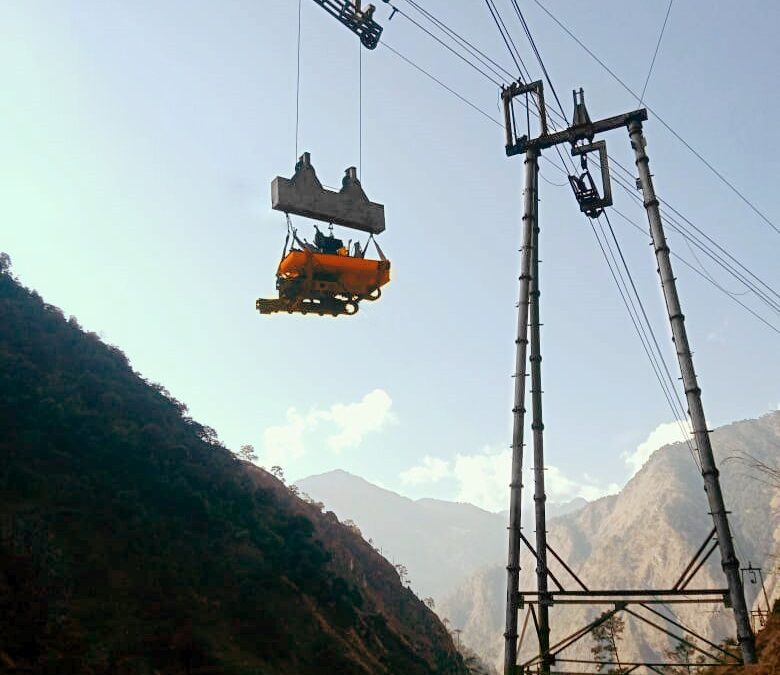
From snow-covered Alps to India’s tough Himalayas, ropeway technology connects the most impossible territories. Where roads can’t reach, and railways can’t climb, steel cables carry people and goods across valleys and mountain peaks.
Ropeway technology in 2026 has evolved from simple mining equipment to today’s sophisticated ropeway systems.
Modern applications now span tourism (cable car technology), industrial operations (material handling ropeways), and urban transit solutions that bypass traffic congestion. Ropeway manufacturers in India have played a bare-bones role in the development of the sector through advanced technology ropeways.
This article will share valuable insights into the core components of the ropeway system and future advancements in this sector. Stay till the end to know the science and engineering behind it.
Ropeway System Technology: An Overview
Earlier ropeways were mostly mechanical and manually monitored. Today, the shift toward future advanced technology ropeway systems has resulted in the implementation of automated systems, digital control, and real-time safety monitoring technology. The development of new materials and drive systems, and control technology improvements has achieved better operational performance and decreased maintenance needs.
Two Main Categories
Passenger Ropeway Systems
Cable car systems have created a fundamental change for both urban transportation networks and tourist movement through cities. Adding on, skiers use gondolas to ascend slopes, aerial tramways take pilgrims to Himalayan temples, and chairlifts provide scenic mountain vistas. Putting it briefly, the passenger ropeway systems enable cities to address their traffic issues through the safe transportation of thousands of people who need to travel each day.
Material Handling Ropeways
Industrial workhorses built for hauling. Material handling ropeways transport ore from remote mines, carry cement across quarries, and move tea leaves down Darjeeling’s steep hillsides. The system operates continuously throughout the week to eliminate unsafe truck conveyance. From hydropower construction sites to power plants, they’re India’s invisible industrial backbone.
How Ropeway Technology Works: Core Components
Understanding ropeway technology means breaking down its elegant engineering into digestible parts. Let’s understand it thoroughly in this approaching section.
Essential Components
1. Support Towers/Pylons
These steel structures hold everything together. The structure consists entirely of tubular steel. The towers require proper siting in line with natural land features to fulfill their dual function of protecting nature. A single foundation might occupy just 10 square meters. It allows the surrounding area to remain mostly untouched.
2. Steel Wire Ropes/Cables
The backbone of cable car technology. Each rope consists of 6-8 strands twisted around a core, with each strand containing dozens of high-tensile galvanized steel wires. This construction provides redundancy. If one wire breaks, others carry the load. Depending on configuration, cables support over 100 tons while resisting weather and decades of use.
3. Drive Station (Power House)
The heart of ropeway technology. An electric motor turns a massive bullwheel (4-6 meters in diameter) that propels the cable loop continuously. Modern systems feature variable speed control and allow detachable grips to slow cabins at stations. It simultaneously maintains high line speeds.
4. Return/Tension Station
Located opposite the drive station, this facility uses counterweights or hydraulic systems to maintain optimal cable tension. It automatically adjusts for temperature changes and cabin loads. Tension station ensures smooth, safe operation.
5. Carriers/Cabins
Passenger ropeway systems use enclosed gondolas, open chairs, or large tram cabins holding 2-200 people. Material handling ropeways employ buckets, platforms, or ore carriers. Additionally, grip mechanisms are crucial: fixed-grip clamps attach permanently to cables and detachable grips release at stations for easy boarding.
6. Safety & Control Systems
Multiple protection layers include service brakes for normal operations and emergency brakes that activate automatically. Sensors monitor cable speed, position, tension, and weather conditions. Remote control rooms oversee systems in real-time, ready to intervene instantly.
The Ropeway Reliability at a Glance
- Built-In Redundancy: Engineers use multiple safety systems to design aerial ropeway systems, which they develop through their engineering work. Moreover, the bicable and tricable systems incorporate backup cables. It is used to maintain cabin safety during haul rope failures through support ropes.
- Real-Time Monitoring Technology: Automated sensors form the nervous system of modern ropeways. Their primary function is to detect cable tension variations within milliseconds, flag speed deviations instantly, and continuously monitor the weather.
- Mechanical Simplicity: Ropeway technology consists of fewer moving parts. It means fewer failure points. Compared to road or rail systems, ropeway systems rely on elegant mechanical simplicity. Modern systems achieve 99%+ uptime and operate continuously.
- Advanced Materials & Construction: High-tensile steel ropes undergo testing at five times their operational load. Galvanized coating resists corrosion for decades. UV-resistant carrier materials withstand constant exposure to sunlight. Modern ropeway manufacturer facilities follow international standards. Therefore, quality is verified at every manufacturing stage.
Applications: Passenger vs. Material Handling Systems
Ropeway technology serves two distinct worlds. First, moving people and second, moving goods. Further, each application demands different engineering, yet with a similar aim: to provide exceptional value. Let’s learn about their applications in different sectors.
Passenger Ropeway Systems Applications
- Tourism Sector
- Urban Transportation
Material Handling Ropeways Applications
- Mining and Quarrying
- Hydropower & Dam Construction
- Tea Estates & Agriculture
- Industrial Logistics
The next section will take you to the future advancements coming in the ropeway sector.
The Future of Ropeway Technology and Infrastructure Development
Urban infrastructure is under increasing pressure. The reason is the expansion of cities and massive population mobility across territories. In this context, ropeways are gaining supreme attention. The shift toward future advanced technology ropeway systems is driven by measurable improvements in engineering and operations.
Modern ropeways incorporate
- automated control systems
- condition-based monitoring
- energy-optimized
Innovation is also pushing ropeway design toward greater durability and scalability. Moreover, advances in cable manufacturing, structural optimization, and predictive maintenance are extending system life.
To make a long story short, ropeway technology is set to play a defined and practical role in next-generation transport and logistics planning.
Conclusion
Ropeways have come a long way from basic cable systems to the sophisticated networks we see today. Ropeway systems have quietly become essential infrastructure across India and abroad.
Moving further, ropeway system engineering has also matured in the past few years. What used to need constant manual oversight now runs on automated controls and predictive maintenance. In the contemporary era, modern ropeways handle extreme weather, steep gradients, and heavy loads more confidently than in earlier times.
If you’re evaluating ropeway systems for tourism, industry, or urban transport, MM Ropeways is the prime ropeway manufacturer near you.
Contact the team to know more about the services and how the company applies each technology to provide the best value in terms of revenue and transportation.
by ropeway-admin | Apr 1, 2026 | Manufacturing
The major hill station project in North India installed a gondola lift system at a cost of several crores. And the business encountered an emergency situation after a few months of operations. Moreover, the system couldn’t handle weekend crowds, and strong winds forced multiple system shutdowns. Is the result POSITIVE? Not! The outcome resulted in revenue losses, frustrated tourists, and an expensive retrofit that could have been avoided through better selection from day one. Cutting a long story short, a perfect-fit gondola lift system for large ropeway projects can turn the tables for business operations.
But how will you decide which gondola is meant for you?
This guide walks you through the critical factors that project managers, resort developers, and urban planners need to evaluate before installing gondola systems for large-scale ropeway projects.
Gondola Lift Systems Basics: A Quick Overview
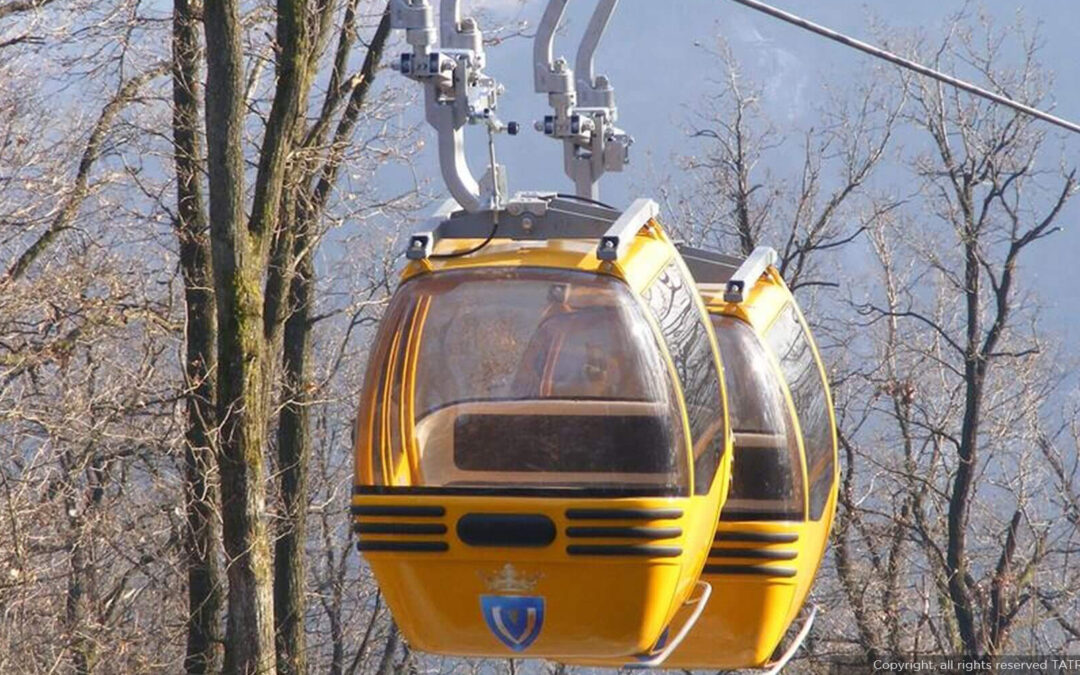
A gondola lift is a type of aerial cable transportation system that operates via a suspended cable. The cable system enables enclosed cabins to move continuously between two terminal stations.
Further, Gondola lifts strike the perfect balance between comfort, capacity, and operational efficiency. This makes them the most suitable system for tourism, urban transport, and ski resort applications.
What makes a Gondola System “Large-Scale”
A gondola lift system qualifies as a large-scale system when its gondola lift moves more than 2000 people per hour throughout the day. Plus, the system has a track longer than 2 kilometers.
Core Components of a Gondola System
Every gondola lift system consists of four essential elements:
Haul Rope: It is the main steel cable that pulls cabins around the circuit. In modern detachable systems, cabins grip and release from this rope at stations.
Carrying Cables: The cabin’s weight is supported by separate support ropes in bicable and tricable systems, while the haul rope system enables cabin movement.
Cabins: The enclosed passenger compartments called cabins can accommodate between 6 to 35 passengers. The system type and specifications determine the maximum capacity.
Stations: Drive and return terminals that house motors, bullwheels, and boarding platforms. These structures manage cabin speed reduction, passenger loading, and system power.
Types & Applications of Gondola Lift Systems for Large Projects
When you’re standing at the base of a mountain or planning a cross-valley transit route, the gondola system you pick really depends on what your terrain throws at you. Let’s walk through the three main types you must take into consideration, or you’ll encounter.
Monocable Gondolas
A monocable does double duty, both carrying the cabins and pulling them along. They work beautifully for moderate distances and terrain. Ski resorts with mid-mountain access and urban routes with shorter spans often go this route.
Bicable Gondola Lifts
Here’s where things get more robust. You’ve got one rope supporting the cabin’s weight and another pulling it forward. Bicable systems handle 2,000 to 3,000 passengers per hour and remain stable in winds up to 90 km/h.
Tricable (3S) Systems: The Premium Choice
When you absolutely need maximum stability and capacity,tricable gondola lift installation steps in. The technology is advanced and supreme. Firstly, two fixed track ropes carry all the weight. Secondly, the third haul rope provides movement.
The system achieves a passenger capacity of more than 4000 people per hour. Plus, it can operate reliably even at wind speeds over 100 kilometers per hour. The flagship tourism installations, major urban transit projects, and major ski resorts with valley crossings all use 3S technology.
Yes, the upfront cost runs higher, but for large projects, passenger experience is the ultimate priority.
Applications of Gondola Lift Systems in Large-Scale Projects
Different industries have different expectations from their gondola systems. The section below outlines key areas where Gondola Lift Systems are needed the most.
- Tourism and Destination Development
- Ski Resorts and Mountain Infrastructure
- Urban Public Transport and Connectivity
- Industrial and Infrastructure Projects
Questions to Ask Ropeway Manufacturers
- Start with their track record.
- How many projects have they completed in terrain similar to yours?
- Ask for reference sites you can visit. Dig into their after-sales support structure.
- What’s the average response time for emergency breakdowns?
- Do they stock critical spare parts locally, or will you wait weeks for shipments during peak season?
- Ask them about their quality standards, such as CEN (European Norms) and ISO certifications.
Critical Selection Criteria for Your Project
The factors that you need to evaluate will determine whether you should install a Gondola lift system. Here are the factors that will guide your decision on Gondola lift installation.
Factor 1: Terrain and Geography Assessment
The first factor that you need to assess involves evaluating the terrain and the geographical features of the area.
Before you start any work, walk the proposed route. How much elevation will you gain from this route? Do you need to cross valleys or climb up a slope?
Monocable systems operate successfully when designers establish intermediate towers at intervals of 200 to 400 meters under normal geological conditions. Rocky terrain, unstable soil, or protected forest areas can quickly push your budget up if you need extensive foundation work.
Factor 2: Passenger Volume Requirements
Be honest about your numbers and, more importantly, with your future growth estimates. A resort that expects 500 visitors during weekdays and 3,000 visitors on weekends needs peak demand-sized systems for its operations. The busiest day needs you to calculate your hourly capacity requirements for the four hours during which your operations run at their highest volume.
Furthermore, your operations need 20 percent of this capacity as a buffer.
If your project targets 2,500+ passengers per hour consistently, monocable systems will struggle to keep up. You’ll want bicable or tricable capability.
Factor 3: Budget and ROI Considerations
The budget requirements and return-on-investment calculations form the third factor in this analysis. Yes, tricable systems cost more initially.
But the complete financial analysis requires a 20-year evaluation period. The evaluation requires you to include revenue losses that result from weather-related service interruptions and maintenance operations, and energy usage. The operational reliability and downtime reduction of a system result in a 50% lifetime savings when you pay 30% more for its initial cost.
Factor 4: Weather and Environmental Factors
The fourth factor is important to study historical wind data for your location. When the average wind speeds exceed 60 km/h during your main operational times, it becomes dangerous to use monocable technology.
All three reliefs, such as coastal areas, mountain ridges, and open valley crossings, require stronger wind resistance than standard requirements. In the same way, people who live in areas with heavy snowfall need to consider design aspects for their cabins and their rope heating systems.
Wrapping Up
The choice of a gondola lift system determines the success of your project for a period between 20 and 30 years. When you select the right ropeway or gondola lift system, your system becomes an incredible resource that manages peak visitor times and extreme weather conditions. When you make a mistake, your result will include both costly system upgrades and missed income opportunities. You now understand the different operating systems: monocable, bicable, and tricable. Also, you got a brief idea of which questions to ask and which errors to avoid.
If you’re planning a project and want guidance based on real experience in Gondola lift manufacturing and installation, talk to the M & M Ropeways team. We’ve worked across mountains, cities, and pilgrimage routes throughout the globe. Let’s discuss what works for your terrain.