
The major hill station project in North India installed a gondola lift system at a cost of several crores. And the business encountered an emergency situation after a few months of operations. Moreover, the system couldn’t handle weekend crowds, and strong winds forced multiple system shutdowns. Is the result POSITIVE? Not! The outcome resulted in revenue losses, frustrated tourists, and an expensive retrofit that could have been avoided through better selection from day one. Cutting a long story short, a perfect-fit gondola lift system for large ropeway projects can turn the tables for business operations.
But how will you decide which gondola is meant for you?
This guide walks you through the critical factors that project managers, resort developers, and urban planners need to evaluate before installing gondola systems for large-scale ropeway projects.
Gondola Lift Systems Basics: A Quick Overview
A gondola lift is a type of aerial cable transportation system that operates via a suspended cable. The cable system enables enclosed cabins to move continuously between two terminal stations.
Further, Gondola lifts strike the perfect balance between comfort, capacity, and operational efficiency. This makes them the most suitable system for tourism, urban transport, and ski resort applications.
What makes a Gondola System “Large-Scale”
A gondola lift system qualifies as a large-scale system when its gondola lift moves more than 2000 people per hour throughout the day. Plus, the system has a track longer than 2 kilometers.
Core Components of a Gondola System
Every gondola lift system consists of four essential elements:
Haul Rope: It is the main steel cable that pulls cabins around the circuit. In modern detachable systems, cabins grip and release from this rope at stations.
Carrying Cables: The cabin’s weight is supported by separate support ropes in bicable and tricable systems, while the haul rope system enables cabin movement.
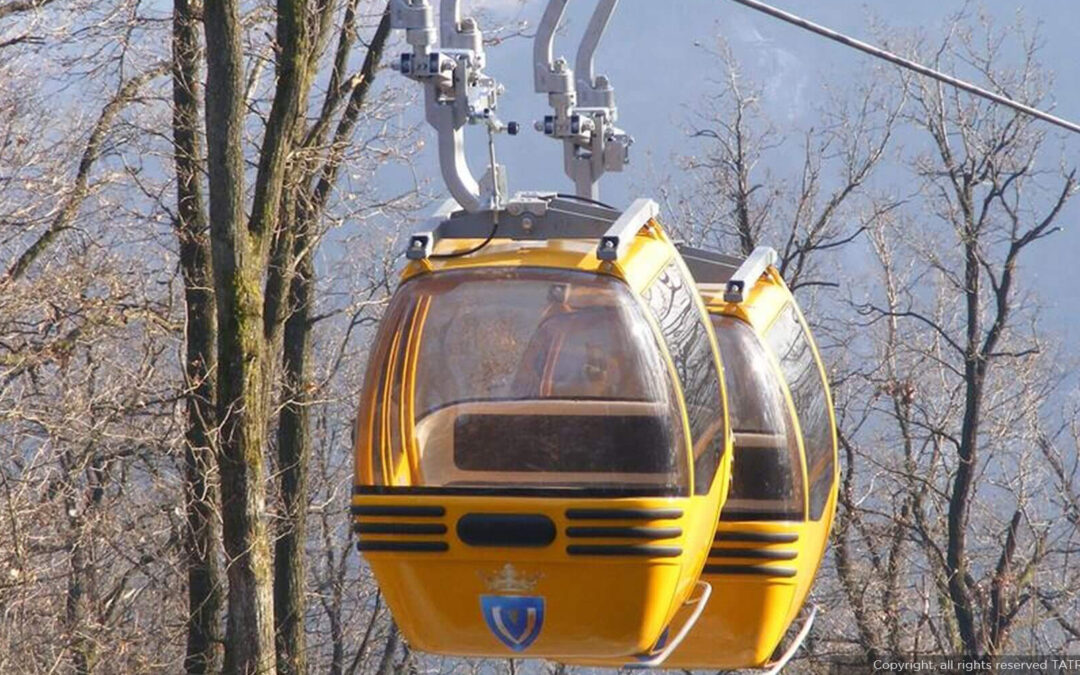
Cabins: The enclosed passenger compartments called cabins can accommodate between 6 to 35 passengers. The system type and specifications determine the maximum capacity.
Stations: Drive and return terminals that house motors, bullwheels, and boarding platforms. These structures manage cabin speed reduction, passenger loading, and system power.
Types & Applications of Gondola Lift Systems for Large Projects
When you’re standing at the base of a mountain or planning a cross-valley transit route, the gondola system you pick really depends on what your terrain throws at you. Let’s walk through the three main types you must take into consideration, or you’ll encounter.
Monocable Gondolas
A monocable does double duty, both carrying the cabins and pulling them along. They work beautifully for moderate distances and terrain. Ski resorts with mid-mountain access and urban routes with shorter spans often go this route.
Bicable Gondola Lifts
Here’s where things get more robust. You’ve got one rope supporting the cabin’s weight and another pulling it forward. Bicable systems handle 2,000 to 3,000 passengers per hour and remain stable in winds up to 90 km/h.
Tricable (3S) Systems: The Premium Choice
When you absolutely need maximum stability and capacity,tricable gondola lift installation steps in. The technology is advanced and supreme. Firstly, two fixed track ropes carry all the weight. Secondly, the third haul rope provides movement.
The system achieves a passenger capacity of more than 4000 people per hour. Plus, it can operate reliably even at wind speeds over 100 kilometers per hour. The flagship tourism installations, major urban transit projects, and major ski resorts with valley crossings all use 3S technology.
Yes, the upfront cost runs higher, but for large projects, passenger experience is the ultimate priority.
Applications of Gondola Lift Systems in Large-Scale Projects
Different industries have different expectations from their gondola systems. The section below outlines key areas where Gondola Lift Systems are needed the most.
- Tourism and Destination Development
- Ski Resorts and Mountain Infrastructure
- Urban Public Transport and Connectivity
- Industrial and Infrastructure Projects
Questions to Ask Ropeway Manufacturers
- Start with their track record.
- How many projects have they completed in terrain similar to yours?
- Ask for reference sites you can visit. Dig into their after-sales support structure.
- What’s the average response time for emergency breakdowns?
- Do they stock critical spare parts locally, or will you wait weeks for shipments during peak season?
- Ask them about their quality standards, such as CEN (European Norms) and ISO certifications.
Critical Selection Criteria for Your Project
The factors that you need to evaluate will determine whether you should install a Gondola lift system. Here are the factors that will guide your decision on Gondola lift installation.
Factor 1: Terrain and Geography Assessment
The first factor that you need to assess involves evaluating the terrain and the geographical features of the area.
Before you start any work, walk the proposed route. How much elevation will you gain from this route? Do you need to cross valleys or climb up a slope?
Monocable systems operate successfully when designers establish intermediate towers at intervals of 200 to 400 meters under normal geological conditions. Rocky terrain, unstable soil, or protected forest areas can quickly push your budget up if you need extensive foundation work.
Factor 2: Passenger Volume Requirements
Be honest about your numbers and, more importantly, with your future growth estimates. A resort that expects 500 visitors during weekdays and 3,000 visitors on weekends needs peak demand-sized systems for its operations. The busiest day needs you to calculate your hourly capacity requirements for the four hours during which your operations run at their highest volume.
Furthermore, your operations need 20 percent of this capacity as a buffer.
If your project targets 2,500+ passengers per hour consistently, monocable systems will struggle to keep up. You’ll want bicable or tricable capability.
Factor 3: Budget and ROI Considerations
The budget requirements and return-on-investment calculations form the third factor in this analysis. Yes, tricable systems cost more initially.
But the complete financial analysis requires a 20-year evaluation period. The evaluation requires you to include revenue losses that result from weather-related service interruptions and maintenance operations, and energy usage. The operational reliability and downtime reduction of a system result in a 50% lifetime savings when you pay 30% more for its initial cost.
Factor 4: Weather and Environmental Factors
The fourth factor is important to study historical wind data for your location. When the average wind speeds exceed 60 km/h during your main operational times, it becomes dangerous to use monocable technology.
All three reliefs, such as coastal areas, mountain ridges, and open valley crossings, require stronger wind resistance than standard requirements. In the same way, people who live in areas with heavy snowfall need to consider design aspects for their cabins and their rope heating systems.
Wrapping Up
The choice of a gondola lift system determines the success of your project for a period between 20 and 30 years. When you select the right ropeway or gondola lift system, your system becomes an incredible resource that manages peak visitor times and extreme weather conditions. When you make a mistake, your result will include both costly system upgrades and missed income opportunities. You now understand the different operating systems: monocable, bicable, and tricable. Also, you got a brief idea of which questions to ask and which errors to avoid.
If you’re planning a project and want guidance based on real experience in Gondola lift manufacturing and installation, talk to the M & M Ropeways team. We’ve worked across mountains, cities, and pilgrimage routes throughout the globe. Let’s discuss what works for your terrain.