
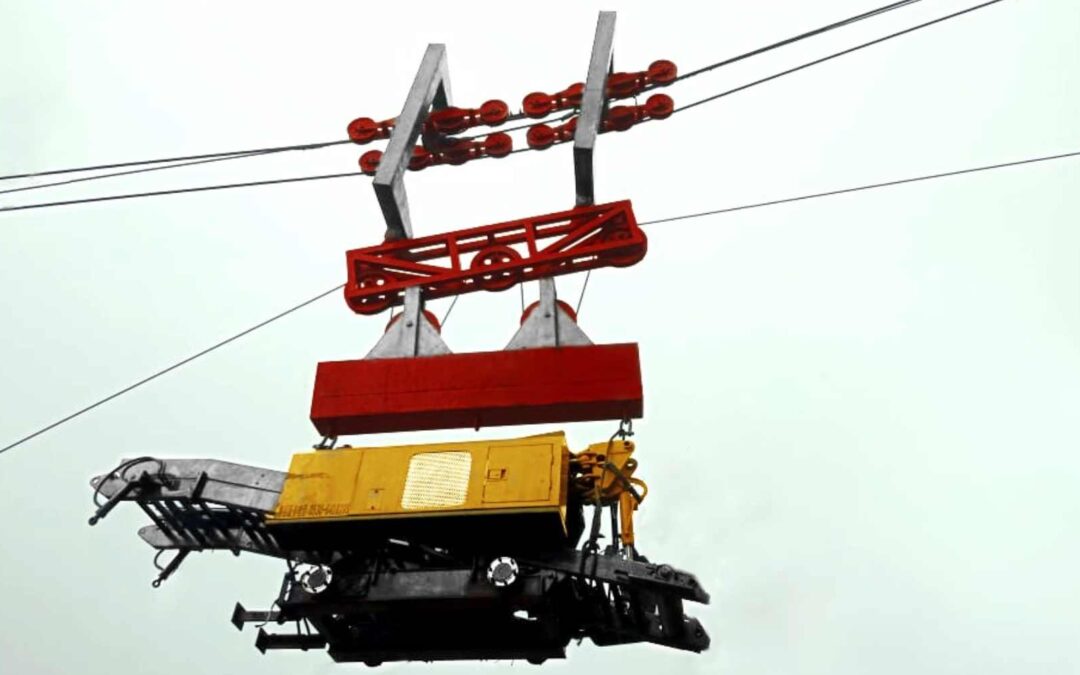
Every mining site hits the same problem sooner or later. The ore sits on one side. The processing plant sits on the other side. In between is land that no truck, no conveyor, and no normal crane can safely cross. It’s not a small inconvenience either. Transportation can account for 40 to 60% of total operating costs at an open-pit mining site, making it one of the biggest line items in the entire operation. That’s when mining teams start asking whether a cable crane in India is the right fit for their site.
It’s not always an easy call. A cable crane for mining can solve a terrain problem that nothing else can, but it also means fixed infrastructure and one decision that shapes how your site runs for decades. This guide goes through when mining cable cranes do make sense, what factors tend to shape their cost, and what you should double-check before you actually commit.
Let’s break this down, starting with where a cable crane actually earns its place on a mining site.
When a Cable Crane Actually Makes Sense for Mining
Not every mine needs a cable crane. But for the right site, it solves a problem nothing else can.
- Moving Overburden on Steep Ground
When waste rock that is sitting above your ore has to travel across a valley or move down a grade that’s too steep for trucks, a cable crane is not only the best choice, it can be the only real one. This kind of situation is one of the main reasons mining ropeway systems are used in hilly areas across India.
For a closer look at how these systems integrate with existing site infrastructure, see our guide on Integrating Aerial Ropeways and Conveyors for Mining Operations.
- Moving Ore From Pit to Plant, Non-Stop
A lot of open pit and quarry locations have the extraction point on one side of a river, gorge, or ridge, and the processing plant sits on the opposite side. In other words, a cable crane goes on a steady cycle, moving a fixed tonnage of ore transport along the distance without really depending on road conditions, weather, or the traffic in between the two points.
- When Building a Road Costs More Than the Mine Can Justify
Roads through hilly or forest terrain in India can cost ₹15–25 crore per kilometer once you include cutting, grading, drainage, and yearly monsoon repairs. For a mid-size mine, that number can match or beat a full cable crane installation, and unlike a cable crane, the road still needs rebuilding every year after monsoon damage.
When a Cable Crane Is the Wrong Choice
A cable crane isn’t the right call for every site. If your mine already has good road access, its fixed cost may not pay off fast enough to justify the switch. The same applies if you only move small, occasional loads rather than steady volume. Cable cranes earn their keep on distance and hard terrain, not on convenience alone.
What Shapes Cable Crane Costs
Once you know a cable crane fits your site, cost becomes a design question rather than a guessing game. A handful of factors decide what that build costs actually, and they rarely work in isolation.
If you’re also weighing a cable crane against a ground-based option, see Cable Cranes vs. Traditional Cranes: Are You Using the Right One? For now, check out the table below.
| Cost Factor | What It Involves | Impact on Cost |
| Load Capacity | Weight moved per trip, from a few tons up to 30-50 tons | Higher, steadier loads raise cost |
| Span Distance | Distance the crane covers, often over 1 km, sometimes past 1,600m | Longer spans need more steel and foundation work |
| Terrain Complexity | Single slope vs. multiple ridges or gorges | Complex terrain needs custom engineering |
| Site Access | How easily equipment and materials reach the site during construction | Harder access raises installation cost |
The Cost of Waiting on a Cable Crane Decision
A decision left unmade doesn’t pause the cost. It just lets it keep running in the background. Truck transport costs can eat up a large share of a mining site’s operating budget through fuel alone, and that spend continues every single day a cable crane isn’t in place to replace it. Every monsoon season, a site continues to rely on haul roads instead of an all-weather system. It risks the same washouts, delays, and repair bills it faced the year before. Coal India’s coal production dropped 1.7% in FY26, partly due to a long, intense monsoon season disrupting mining, even though it still supplies over 80% of India’s domestic coal.
Sites that commit to a decision early often complete cable crane installation before the next monsoon or extraction cycle begins, avoiding an entire additional year of the same transport losses. Delaying the decision doesn’t reduce the expense; it simply pushes the same ongoing cost further down the calendar while the underlying terrain problem stays exactly as it was.
What Indian Mining Sites Should Check Before Deciding
A few practical questions separate a smart cable crane investment from a costly mistake.
- Ore and overburden volume: how much material moves, and how steady is that volume month to month? Cable cranes work best against predictable loads
- Monsoon disruption: Do haul roads wash out or turn unsafe for weeks every year, and what does that downtime actually cost in lost production?
- Environmental clearance timeline: cable cranes disturb far less land than roads, which can speed up approval for projects working under a tight deadline
- Project length: cable cranes are built to last decades; a mining lease running 15-20+ years changes how the investment spreads out over time
- A real site survey: terrain mapping, load numbers, and span length- needs to come from an actual study of the site, not an assumption based on a similar-looking mine elsewhere.
Why Prefer M & M Ropeways for Mining Cable Cranes
M & M Ropeways, a leading cable crane manufacturer in India, has been at it for over 35 years, designing, building, and installing cable cranes and aerial ropeways across India’s toughest terrain, with more than 120 finished projects across mining, hydropower, and construction.
Cable cranes are built in-house, and they are designed based on OITAF guidelines, certified under ISO 9001:2015, ISO 9000:2015, and ISO 14001:2015. That kind of experience turns into systems engineered around what happens in real Indian mining settings, steep hill terrain, heavy monsoons, and workplaces where a normal road just isn’t realistic. Every project starts with a genuine look at a site’s terrain, load needs, and timeline, so the system delivered matches what the mine actually needs.
Summary
A cable crane for mining earns its place on sites where terrain, not budget, is the real obstacle: steep overburden removal, pit-to-plant ore transport across gorges, or roads that cost more to maintain than they’re worth. Cost still matters, and it comes down to load capacity, span distance, terrain, and site access, but it’s a design question to work through once fit is confirmed, not the first thing to weigh.
If your mining site is weighing this decision, reach out to M & M Ropeways for a technical evaluation based on your own terrain and tonnage. CONTACT M & M Ropeways to schedule a consultation.
Frequently Asked Questions
When does a mine actually need a cable crane instead of trucks?
When terrain rules out road access entirely, or when road construction and yearly monsoon repair would cost more than the mine can justify. Steep overburden removal and pit-to-plant ore transport across gorges or rivers are the most common cases.
Does the cable crane cost in India change by region?
Yes. Terrain matters more than location alone. A cable crane built for the steep, wet terrain of Himachal Pradesh or the Northeast usually needs different tower engineering than one built for flatter ground, even at a similar span and load.
Is a cable crane more expensive than building a road?
Often, no, once the full picture is considered. Roads through hilly mining land can cost several crore per kilometer and need yearly monsoon repair. A cable crane costs more upfront per meter but needs far less ongoing upkeep.
How long does it take to install a mining cable crane?
Most projects move from planning to full operation in 12-18 months, depending on the overall span, the terrain, and where the environmental clearances sit.
Can an existing mine add a cable crane to its current setup?
Yes, in most cases like that. Cable cranes often run alongside trucks or conveyors that are already in service, covering the specific land segment where ground transport doesn’t really make sense.