
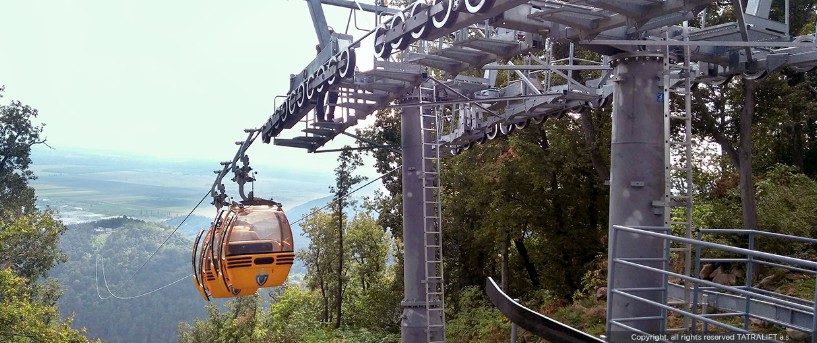
Connectivity becomes more than a convenience at the places where roads disappear into sharp bends. And mountains? They dictate every engineering decision. This becomes a huge challenge. Traditional Infrastructure doesn’t work well in this kind of landscape. As they are time-consuming and expensive. However, even after heavy investment, many regions remain cut off during certain seasons. This affects mobility, development, and access to essential services.
Here, ropeway systems in hilly areas offer a smarter, more adaptable solution. A modern ropeway transportation system ensures consistent connectivity with minimal environmental impact. And all this is backed by strong engineering expertise and project-focused execution. M&M Ropeways, as a trusted ropeway manufacturer, supports such critical infrastructure needs. How? By delivering reliable ropeway solutions that are designed specifically for challenging geographies.
The Magic of Ropeways: How They Work and Why They’re Important
What are Ropeway Systems?
So, what are Ropeway systems really? A reliable transportation system that carries people or materials above the ground. It relies on high-strength steel cables, which are stretched between two carefully positioned towers. Cabins, chairs, or carriers are suspended from these cables and move continuously. They are powered by a central drive system. The working principle is simple and reliable. It allows ropeways to operate smoothly in steep, uneven, and sensitive terrain.
Types of Ropeways Systems
Ropeways are built in different configurations based on usage and load requirements.
- Passenger Ropeways: Commonly used for tourism, urban hill mobility, and pilgrimage routes.
- Material Ropeways: Support mining, construction, and industrial projects.
Cable Configurations Used
- Mono-cable: Suitable for shorter spans.
- Bi-cable or tri-cable systems: Designed for longer distances and heavier loads.
Why Ropeways Matter
The aerial ropeway system operates as a transportation system that moves across valleys, rivers, and slopes. All without needing to conduct extensive earthwork operations. The ropeway transportation system provides both operational efficiency and advanced capabilities to handle difficult topographical challenges.
Why Ropeways Are Ideal For Remote & Hilly Connectivity
Ropeway transportation systems should be designed to adapt to the terrain of remote and hilly regions. Completely without extensive building or lasting interruption. Due to the unstable slopes and unpredictable weather, conventional infrastructure finds these areas particularly challenging. However, ropeways? By resolving these issues, they provide a workable solution to enhance ropeway connectivity in outlying regions.
Terrain Adaptability Across Challenging Landscapes
Ropeways are engineered to span steep slopes, valleys, rivers, and forested regions with ease. They eliminate the need for extensive cutting or tunneling. This makes them highly effective for ropeway connectivity in remote areas where access is limited.
Minimal Land Disruption and Faster Deployment
Ropeways leave a smaller environmental footprint. They need fewer support structures and less civil work. This streamlined construction approach also shortens project timelines. By allowing ropeway systems in hilly areas to become operational much faster than traditional road or rail projects.
Reliable Performance in All Weather Conditions
They are designed for consistency. Their biggest advantage is that they keep operating during heavy rain, snowfall, and landslides. These conditions often disrupt surface transport. By ensuring dependable connectivity throughout the year.
Advantages of Ropeway Systems Over Conventional Transport
What Ropeways actually deliver: smart, future-ready alternative to traditional transport. Especially where terrains fight back. Their designs tackle real challenges head-on, offering benefits that matter. Including lower costs, cleaner operations, and built-to-last reliability.
Here are some advantages of Ropeway systems:
- Cost Efficiency: They offer minimal land acquisition and streamlined construction. That means controlled budget and faster project delivery. Along with no drawn-out timelines and bloated expenses.
- Environmental Sustainability: They glide above ground, leaving forests standing and soil untouched. Results in less excavation, zero habitat destruction, and dramatically lower emissions. By making them an eco-conscious choice.
- High Safety and Operational Continuity: Ropeways use precision engineering to move smoothly and safely, with fail-safes built in. One Biggest Advantages? Works well even in rain, wind, or rough conditions.
- Low Maintenance and Long-term Value: Fewer ground components mean simpler upkeep. The result? Lean operating costs and dependable performance that pays off year after year.
Ropeway Applications: From Mountains Projects to Infrastructure Development
Ropeways have evolved beyond tourism attractions to become versatile infrastructure solutions across multiple sectors. Their strength lies in conquering difficult terrain. How? By making them invaluable for commercial ventures and public projects alike. Because when roads can’t cut it, at that moment ropeway for mountain projects step in to deliver access, efficiency, and safety where it counts most.
Key Applications of Ropeway Systems
Tourism & Pilgrimage Zones
In tourism and pilgrimage zones, ropeways streamline visitor flow. While easing pressure on delicate ecosystems. They ensure smooth, nonstop transportation without disturbing natural landscapes.
Mining & Material Handling
Ropeways provide non-stop transportation of raw materials across valleys and rugged landscapes. By powering mining and material handling operations through systems like cable cranes, mono-cable ropeways, and bi-cable ropeway setups. This eliminates the need for costly roadworks and heavy ground infrastructure.
Remote Construction Sites
Ropeway systems provide remote construction sites with their most substantial operational benefits. The systems enable fast and efficient transportation of equipment and supplies to difficult-to-access sites. This helps maintain project schedules without experiencing any delays or operational challenges.
Rural & Border Connectivity
The impact goes beyond industry. Ropeway for mountains projects bridges gaps for rural and border communities. By connecting them to vital services and economic opportunities.
Sustainable mobility is climbing up the agenda for governments and urban planners. Ropeways are cementing their place in modern infrastructure development. By driving growth with smart design and environmental care.
Why M&M Ropeways is a Trusted Ropeway Solution Provider
M&M Ropeways has earned its reputation by delivering dependable systems through complete end-to-end execution. All, from initial design and precision engineering to manufacturing and on-site installation. Every Project gets personalized treatment, shaped to match specific terrain challenges and operational demands. This makes their work especially effective for ropeway systems in hilly areas where standard solutions simply won’t hold up.
For M&M Ropeways
- Safety is built into every stage
- Rigorous quality standards are a priority
- Performance benchmark according to international standards
Their portfolio spans both passenger and material ropeways. By proving their versatility across varied applications. Plus, by focusing on durability and smart design, M&M Ropeways actively supports sustainable infrastructure development. Also, creating systems engineered for efficiency that lasts.
Conclusion: Smarter Connectivity for Challenging Landscapes
Ropeways have proved themselves as practical, forward-thinking solutions for regions where traditional transport constantly struggles. What are they really doing? Solving mobility problems that have persisted for decades in tough geographies. You Know how? With unmatched terrain adaptability, environmental responsibility, and rock-solid reliability.
As infrastructure thinking matures, ropeways are becoming essential to strengthening connectivity in remote areas. Plus, unlocking development without sacrificing the environment.
Contact M&M Ropeways today to discover expertly engineered, dependable, and sustainable systems. These are specially built to match any terrain and project requirement.