
There is no such thing as “close enough” in this business. You either meet the required standards, or you just don’t. The margin for error in this business is zero. Because when a ropeway system faults, the consequences extend far beyond delays or money loss. It’s people’s lives and safety at stake. So, there’s no way you can compromise in decision-making here. Ropeway systems are not just limited to mountain areas. These are used in a wide range of environments, serving urban transit networks and industrial sites, and serving millions of passengers every year. The International Organization for Transportation by Rope (OITAF) has brought together manufacturers, operators, regulators, and research institutions from approximately 35 countries to advance global safety and engineering practices for ropeway systems.
M & M Ropeways has completed 120+ projects, including cable crane projects. 35 years of experience in the industry & the company has worked across challenging terrains and demanding industries where engineering precision, safety, and long-term performance are non-negotiable.
Why Choosing The Right Ropeway Manufacturer is Important?
A ropeway is not something you can update every other year. Pricing matters, but don’t make it your deciding factor in this case. The cheapest quote can lead to far more expensive repairs in the future, operational risk, and frequent maintenance. The right partner will give you much more than just delivering the equipment:
- Engineering customized specifically for your project
- Compliance with international safety requirements
- Reliable manufacturing quality
- Project planning and execution support
- Installation supervision
- Operator training
- Long-term maintenance assistance
- Spare parts availability throughout the system’s lifecycle
In short, it’s not just limited to purchasing ropeways; it’s your investment in a long-term safe transportation solution that should remain safe, dependable, and cost-effective not just for the initial stage but for years. Explore M&M Ropeways to see how we’ve delivered reliable ropeway systems for tourism, industrial, infrastructural, and material handling applications. Let’s crack the 12-point checklist now.
12-Point Checklist for Selecting the Right Ropeway Manufacturer
First of all, here’s a quick table version of all the important things.
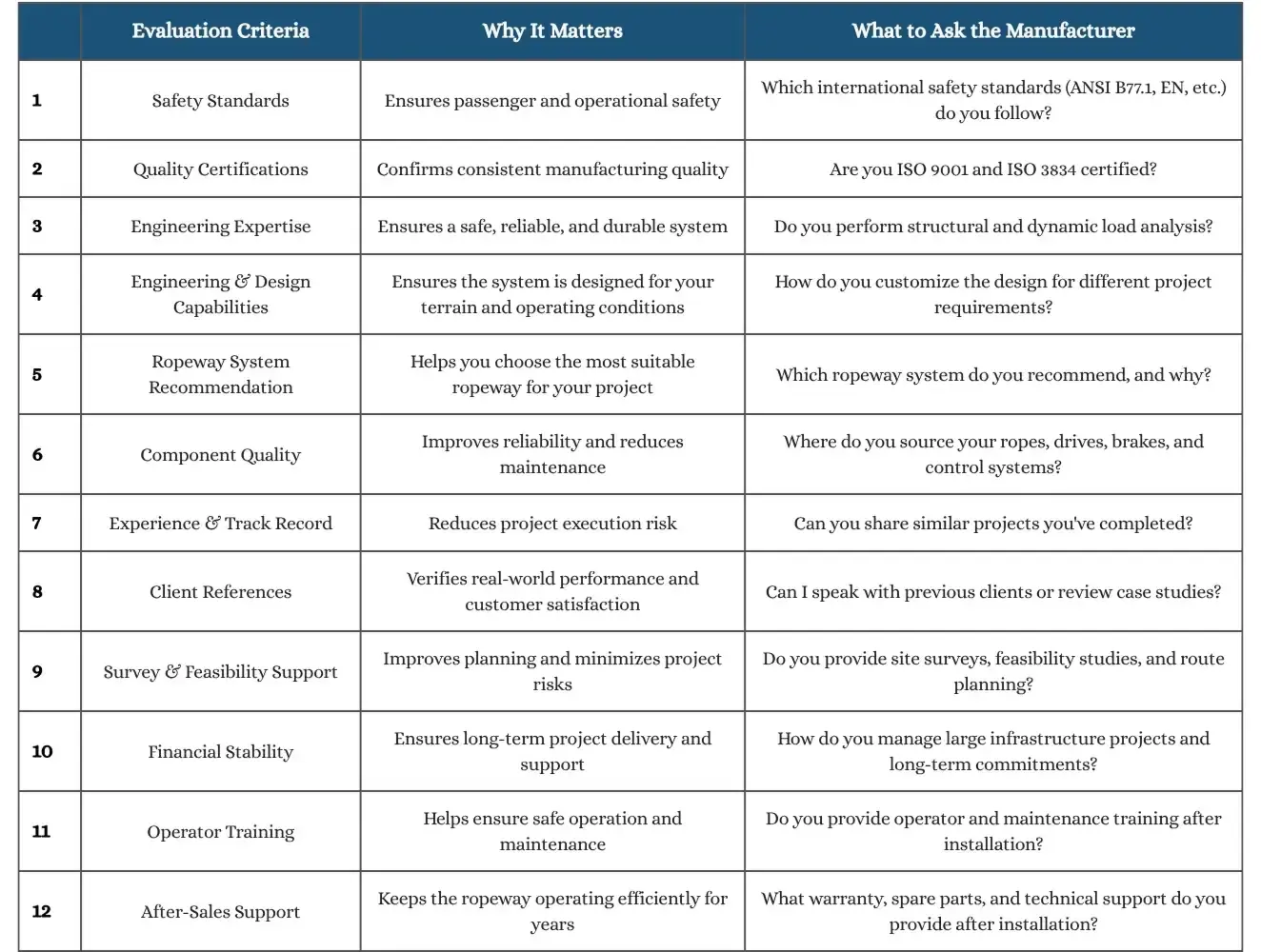
Let’s elaborate on each one, one by one.
1. Make Sure They Meet International Safety Standards
Again, as mentioned earlier, safety is not something you can compromise in this business. Always look for a manufacturer that builds systems in accordance with internationally recognized safety standards, not just local regulations. The safety standards should match throughout design, manufacturing, testing, and installation. Confirm that the system complies with standards such as ANSI B77.1 or relevant European EN standards where applicable. If they are following global safety standards, then they’ll typically offer:
- Better engineering documentation
- Thorough inspection and testing procedures
- Higher system reliability
Questions to ask:
- Which international safety standards do your systems follow?
- How are your systems tested before commissioning?
- Can you provide compliance documentation?
2. Check Their Quality Certifications
Ropeway quality comes down to one thing: how well it’s built. A solid build means better performance. It also means the ropeway lasts longer. So always check the manufacturer’s certifications first. Look for ISO 9001. This one covers quality at every stage, from design to maintenance. Check things like the inspection process. Check customer support too. Got a project with structural steel or welding? Then ISO 3834 matters as well. Together, these certifications back up quality from the first step to the last.
- ISO 9001 quality management certification
- Controlled production processes
- Strong quality control procedures
- Verified welding standards where applicable
We also serve clients across international markets.
3. Evaluate Their Engineering Expertise
Good ropeway design goes beyond manufacturing quality. They’re supposed to follow industry standards like OITAF, because these rules exist for a reason. These standards make sure your ropeway is safe, reliable, and built ot stand the test of time. Manufacturers that follow recognized engineering practices can often provide:
- Safer system designs
- Improved operational reliability
- Easier regulatory approvals
- Greater confidence for international projects
4. Evaluate Engineering and Design Capabilities
Projects are different from each other. Terrain, weather, elevation, and operating requirements of that area are all important things to consider when deciding how a system should be designed. A capable manufacturer understands this. They customize the solution based on your specific needs. They do not rely on a standard configuration. Their engineering team should be able to handle:
- Structural analysis
- Load calculations
- Tower and foundation design
- Electrical and control systems
- Mechanical optimization
- Wind and environmental assessments
Strong engineering helps ensure reliable performance in both everyday and challenging operating conditions.
5. See How They Design Ropeway Systems
The right manufacturer recommends what fits your project, not what they happen to sell. After evaluating your requirements, they may suggest:
- Monocable ropeways
- Bicable ropeways
- Gravity ropeways
- Material ropeways
- Cable crane systems
The recommendation should match your site conditions, budget, capacity needs, and future expansion plans. Explore the complete range of ropeway products.
6. Review Component Quality and Testing Procedures
The reliability of a ropeway comes down to the quality of its parts. Important components, which include wire ropes, drive systems, brakes, towers, bearings, and control systems, should meet high performance standards and undergo rigorous testing. Ask manufacturers:
- Where do you source your major components?
- How are components tested?
- Are inspections carried out before installation?
- What quality assurance process do you follow?
Those manufacturers that use trusted suppliers and hard testing generally deliver more reliable systems with lower maintenance costs.
7. Examine Their Track Record
For complex infrastructure projects, experience counts. But don’t just check years in business. That number alone means little. Look at completed projects instead. Real work tells the real story.
A strong portfolio should include experience in sectors such as:
- Tourism
- Mining
- Hydropower
- Dam construction
- Infrastructure
- Forestry
- Remote logistics
Projects completed in conditions similar to yours often indicate stronger technical expertise. We also provide ropeway solutions across South Asia and Africa, with dedicated expertise for projects in Bhutan, Nepal, and Africa.
8. Request Client References and Case Studies
You really can get a good idea about a manufacturer from previous projects. Ask for client references or case studies that demonstrate their experience and project delivery.
Speaking with previous customers can help you evaluate:
- Project execution
- Communication
- Timely delivery
- Installation support
- Equipment reliability
- After-sales service
Consistently positive feedback is usually a good sign of a dependable partner.
9. Check if They Offer Survey and Feasibility Support
Successful projects start well before manufacturing begins. An experienced manufacturer should support the planning phase by assisting with:
- Site surveys
- Route alignment
- Topographical studies
- Feasibility analysis
- Preliminary engineering
- Capacity planning
Early technical support helps reduce delays and avoids costly changes. It also improves overall project efficiency. The manufacturer should understand local environmental regulations. They should design the project to minimize ecological impact. This includes careful tower placement and reduced land disturbance. The design should also comply with environmental approvals required in your region.
10. Evaluate Financial Stability
Large projects take months and years to complete. So always check if the company is financially stable or not. These little background verifications go a long way. A company that has strong financial backing is more likely to see your project through to the end and offer you long-term support. Including honoring warranties and service commitments well into the future.
- Maintain production schedules
- Manage supply chains effectively
- Honor warranty commitments
- Supply spare parts for years
- Support future expansions
This reduces the risk of project delays and long-term service issues.
11. Confirm Training and Knowledge Transfer
Installing the ropeway is only the first step. Your operators and maintenance team should receive proper training to keep the system running safely and efficiently.
A reliable manufacturer should provide the following:
- On-site operator training
- Maintenance guidance
- Emergency procedure training
- Operating manuals
- Troubleshooting support
Well-trained teams can improve safety, reduce downtime, and extend the life of the equipment.
12. Review Their After-Sales Support and Spare Parts Service
Regular maintenance is a reality for any ropeway system, no matter how well it is built. Parts will need to be replaced over time. Make sure the manufacturer you choose offers continued technical support. This support should cover the entire lifespan of the system.
Look for:
- Comprehensive warranty coverage
- Fast technical support
- Genuine spare parts
- International parts availability
- Maintenance and inspection assistance
Good after-sales support keeps your ropeway running smoothly and reduces costly downtime over the long term.
Common Mistakes Buyers Should Avoid
Buyers usually make the same mistakes when selecting a ropeway manufacturer. And these mistakes are completely avoidable if you are aware of a few things.
- Making Money The Deciding Factor
Poor quality material, limited support, and experience can cost you more. So always try to go for quality and experience rather than going for a low-budget quote.
- Not Taking Certifications Seriously
Manufacturers without proper safety standards and quality can lead you to operational risks and compliance issues in the future. So always look for certifications and safety standards.
- Underestimating Experience
A manufacturer who has delivered projects already is always aware of what to and what not to do in serious situations. An experienced manufacturer is always better prepared to handle challenges. Go for an experienced company.
- Not Evaluating Support Services
A ropeway project is something that runs for decades. Having a good support system in maintaining and coordination in case of any inconvenience is always important.
Final Verdict
Making the right decisions about your ropeway manufacturer is something that will impact your business for years. This business is not just about making money but also building trust in the industry, as it involves people’s lives. Choosing the right partner with proven experience, certifications, international exposure, and quality manufacturing is really important. This 12-point checklist covers almost everything that you should not miss.
Looking for a ropeway manufacturer you can trust? Get in touch with M & M Ropeways. Tell us about your project. We’ll help you land on the right solution for your needs.
Frequently Asked Questions (FAQs)
What things do I keep in mind when choosing a ropeway manufacturer?
When you are choosing a ropeway manufacturing partner, look for international-level safety compliance, certifications, quality in manufacturing, good long-term sales support, and relevant project experience. If needed, they should have readily available spare parts.
Why are international safety standards important for ropeway systems?
International standards cover all important aspects of safety. You can count on passenger safety and regulatory compliance across different regions.
What should I check before choosing a ropeway manufacturer?
Always look at safety standards, certifications, past completed projects, and spare parts availability. A good manufacturing partner will help you through planning, installation, and long-term maintenance support.