
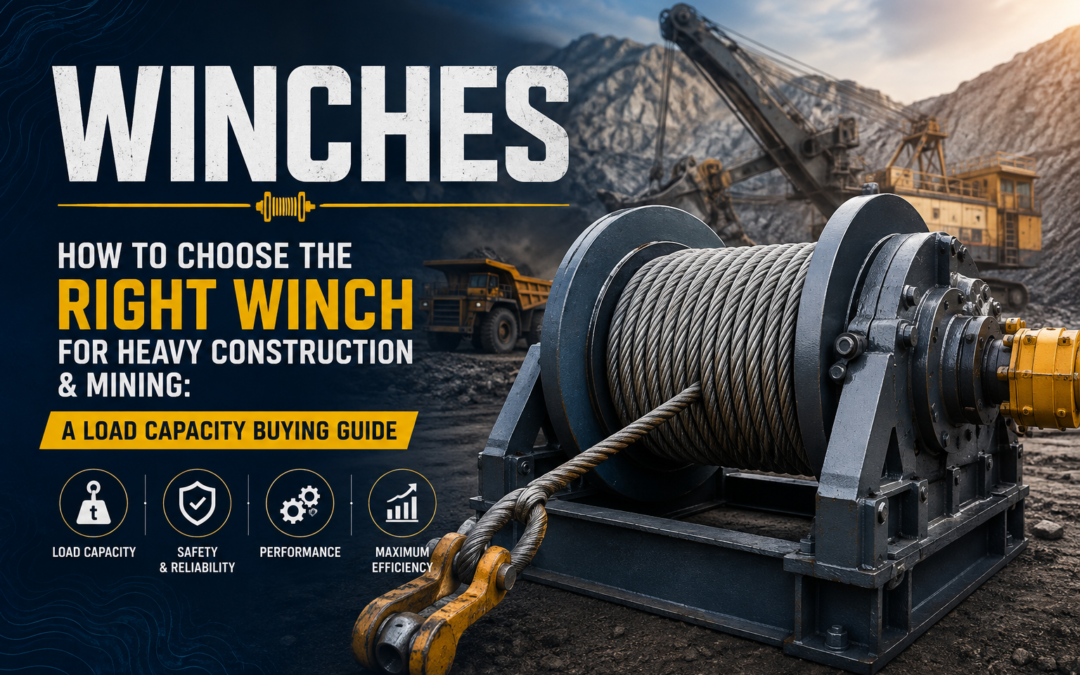
Buying the wrong winch is more than a bad shopping choice. Broken equipment, days of lost work, and a crew put in danger- that’s the risk. The biggest heavy-duty winch isn’t automatically the right one. It needs to fit the job, the site, the load, and the daily runtime. Most safety guides say not to buy a winch that matches your load exactly. You want extra room to spare. This guide breaks down how to figure out the right load capacity, what rated line pull means, how electric and hydraulic winches compare, and what matters most when picking equipment for tough jobs. At M&M Ropeways, 40 years of experience has shown that getting this choice right at the planning stage saves a lot of headaches later.
Why Winch Selection Matters
A heavy-duty winch does a lot of heavy lifting. It pulls machines, lifts parts, and helps put up ropeways. If the motor is too small, it has to work harder than it should. That leads to overheating. Sometimes faster wear on the cable and unsafe lifts. An oversized motor means higher costs for power and maintenance, more than you actually need. What you want is a winch that manages your load comfortably, with a bit of extra capacity left over. That’s why smart buyers follow an industrial winch selection guide instead of comparing horsepower. Builders like M&M Ropeways look at several factors before suggesting anything from their range of winches.
Understanding Winch Load Capacity
Winch load capacity is the strongest pull a winch can safely give under good conditions. It’s usually shown as rated line pull in pounds, kilograms, or tonnes. Most engineers pick a winch rated 1.5 to 2 times higher than the actual load. Load capacity and lifting capacity aren’t the same thing. Most winches are rated on how hard they pull sideways, not how much they lift straight up. Rated line pull is the strongest pull on the first cable layer. Working load is what the winch handles day to day. Breaking strength is where the cable snaps. A safety factor is the cushion you build in. It depends on a lot of factors in how much a winch can pull. Some factors include how much cable is wound on the drum, how steep the ground is, how rough the surface is, how worn the rope is, and how strong the motor is. This is why in so many scenarios, actual capacity is lower than what the box says.
Key Factors in Winch Selection
Think about load type first. Is it sitting still, rolling, or being lifted or dragged? Each needs different pulling force. Then think about the environment. Mines bring dust, water, mud, heat, and nonstop use. Construction sites bring frequent moves and changing terrain. This often decides whether electric or hydraulic fits better.
Duty cycle matters too. Heavy, near-constant use needs stronger cooling, tougher gears, and better parts, which is why companies like M&M Ropeways build equipment around actual use, backed by their own manufacturing setup, instead of selling one standard option to everyone. Manufacturers test this rating under perfect conditions, but real job sites rarely match that. Uneven ground, mud, slopes, wind, and worn rope all cut into real pulling power. That’s why good engineers never pick a winch off the box number alone. At M&M Ropeways, the team looks at terrain, run time, rope specs, and maintenance before recommending anything.
Electric vs. Hydraulic Winches
For occasional pulling, electric usually works fine. For heavy, continuous work, hydraulic tends to win since it keeps pulling strong without overheating. You’ll pay less for an electric winch, and it’s easier on maintenance too, but it just wasn’t designed for nonstop, heavy-duty use. Hydraulic winches cost more from the start, though they deal with heat and constant pulling far better. aaThat’s why they’re the standard choice for mining, ropeways, and large infrastructure projects. This is also why M&M Ropeways looks at the full project, including cable crane systems, before making a recommendation.
Hydraulic Winches for Mining
Mining sites are some of the toughest environments for any machine. A winch running underground or at a processing site often works long hours under heavy loads in stride, and shrugs off dust and moisture. Think about the difference between hauling equipment up a steep mine road versus moving beams across flat ground. There’s a solid reason mining leans on hydraulic winches. They keep pulling steadily without overheating, produce strong torque even when running slow, stand up to heavy loads, and manage dust and moisture without any issue.
Choosing a Winch for Heavy Construction
Start with the job. Will it pull or lift? How often will it run? What’s the heaviest load? Then work out the real load, including attachments, rigging, cable weight, and slopes, not just equipment weight. Multiply the total by 1.5 to 2 for your capacity, then pick a power source based on site power, run time, and conditions. Finally, check maintenance. Choose equipment that’s easy to service, with spare parts and good support, which is why teams often work with builders like M&M Ropeways for engineering and ongoing support.
Practical Winch Selection Guide
Buying on price alone, ignoring duty cycle, overlooking the environment, skipping the safety factor, mixing up lifting and pulling capacity, and assuming a construction winch load rating holds true everywhere. Avoiding these keeps equipment running longer and saves money.
- Choosing a Winch by Application: General construction works fine with electric or hydraulic. Bridge construction needs hydraulic for steady pulling. Mining needs hydraulic winches built for heavy loads and rough conditions. Material ropeways need a custom hydraulic setup for terrain and rope length. Cable car installation needs hydraulic for precise, safe control. For specialized transport, M&M Ropeways builds the winch into the full material handling ropeway system rather than treating it separately.
- Winch Capacity Checklist: Find your max load. Add attachments and rolling resistance. Account for slope and friction. Apply a safety factor of 1.5 to 2. Pick the right rope size and power source. Check duty cycle, environment, and safety compliance. This narrows your options before detailed engineering starts.
- A Real-World Winch Sizing Example: A contractor building a material ropeway across mountain terrain has a payload of about 8,000 lb. After accounting for slope, rope weight, wind, and daily run time, the team lands on a 20000 lb hydraulic winch for the right safety margin. A 10,000 lb unit based on payload alone would have worn out much faster.
Finding the Right Winch Size
If you are trying to figure out the right size, you need to look at a few things. You load, terrain, duty cycle, and safety margin. Usually, 10,000 to 15,000 lb is enough for light equipment recovery. The machinery which is medium, you may need something in the range of 15,000 to 20,000 lb. Heavy industrial jobs often need a 20,000 lb hydraulic winch or more. Ropeway construction is something different, since it typically needs a custom setup designed for the specific site. Check the maximum working load, duty cycle, rope length, and line speed. Think about dust, rain, snow, and temperature too. Make sure you know what power is available, since that alone often decides electric versus hydraulic. And don’t skimp on safety features like automatic brakes and overload protection.
Final Thoughts
Choosing the right winch takes more than picking the strongest one available. Every part needs to fit together safely across ropeways, cable cars, and mining transport systems. It comes down to your load, environment, duty cycle, rope specs, and safety needs. Applying a safety factor of 1.5 to 2 times your expected load keeps things running smoothly. Whether you’re weighing an electric winch vs hydraulic winch heavy duty decision or need a hydraulic winch for mining operations, let the engineering guide your choice. The M&M Ropeways team can help you find the right winch for your project. Get in touch to talk through your requirements.
Frequently Asked Questions
How do I calculate winch load capacity?
Start with your heaviest load, then add in slope and friction resistance. Once you’ve got that total, multiply it by 1.5 to 2 for your safety factor. That final number is your target capacity.
What’s the difference between hydraulic and electric winches?
A hydraulic winch is built for constant, heavy-duty work, especially in rough or demanding conditions. An electric winch is simpler to install and maintain, and works fine for lighter jobs or occasional use.
How much weight can a heavy-duty winch actually pull?
That depends on a few things, mainly rated line pull, cable layers on the drum, the terrain, and site conditions. Most industrial winches fall somewhere between 10,000 lb and over 50,000 lb, but don’t just go by the number on the box. The right size comes from doing the actual math for your job.
Is hydraulics really better for mining?
In most cases, yes. Hydraulic winches bring more torque, hold up better under continuous use, and stay reliable even with dust, moisture, and steep terrain in the mix.
Why does rated line pull matter so much?
Because it’s the strongest pull you’ll get, and that’s only true for the first layer of cable on the drum. Add more layers, and that pulling power starts dropping.
Why work with an experienced ropeway manufacturer for a winch?
Because a manufacturer who’s done this before looks at the bigger picture. Not just the winch itself, but the terrain, rope specs, safety needs, and what the project might need down the road.