
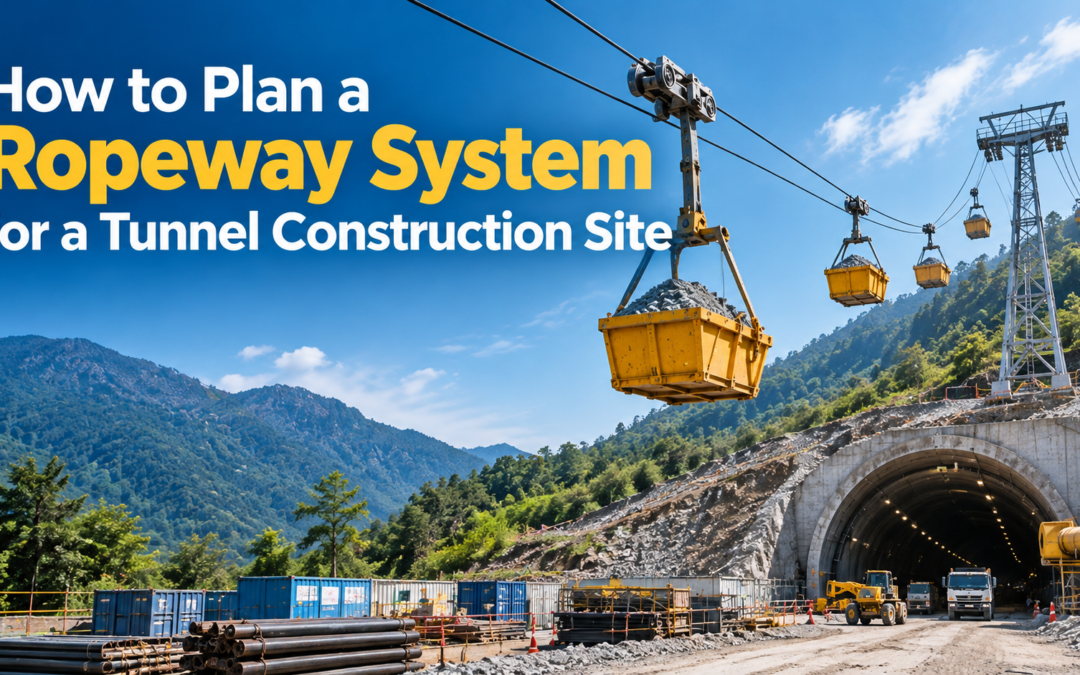
Tunnel construction rarely happens on flat, open ground. Most tunnel sites sit deep inside hills, gorges, or mountain belts where trucks cannot reach the work face. Roads take months to build. Even then, monsoon rains wash them out fast. This is where a well-planned ropeway system changes the outcome of the entire project. It carries workers, machine parts, and construction materials straight to the tunnel portal, skipping the terrain problem completely.
Planning a ropeway installation for a tunnel site is not the same as planning one for tourism or passenger use. The loads are heavier. The schedule is tighter. And material has to move in both directions.
This guide walks through every step of planning a ropeway system for a tunnel construction site, from the first survey to the final safety check.
Why Tunnel Construction Sites Need a Dedicated Ropeway System
Tunnel work depends on a steady supply chain. Cement, steel, ventilation ducts, and fuel need to reach the tunnel face. At the same time, excavated rock and mud, known as muck, need to leave the site just as fast. If either side of this flow slows down, the whole project slows down with it.
A dedicated ropeway system solves this by running scheduled trips that do not depend on road conditions. Rain, landslides, or a blocked hill road will not stop it. This is one reason ropeway construction has become common in hydropower, dam, and tunnel projects across hilly Indian states.
Our earlier guide on aerial ropeways for difficult terrain construction covers this challenge in more depth, including how ropeways compare with building temporary access roads.
Step 1: Survey the Site Before You Design Anything
No ropeway system should be designed from a map alone. A physical site survey comes first.
The survey team studies:
- Ground slope and stability along the proposed route
- Distance between the material yard and the tunnel portal
- Rock type and soil conditions for tower foundations
- Wind exposure at higher points on the alignment
- Access for maintenance vehicles once the line is running
This step decides almost everything that follows. Get the survey wrong, and the whole ropeway construction plan needs rework later, which costs both time and money.
Step 2: Match the Ropeway Type to Tunnel Logistics
Not every ropeway system suits a tunnel construction site. The choice usually comes down to how much weight moves per trip and how often the line needs to run.
| Factor | Material Ropeway | Cable Crane |
|---|---|---|
| Best suited for | Continuous small to medium loads | Heavy, oversized loads |
| Typical use on tunnel sites | Cement, steel, worker supplies | Formwork, machinery parts, muck skips |
| Route flexibility | Fixed line between two or more stations | Works across wide spans and valleys |
| Setup complexity | Moderate | Higher, needs stronger anchor points |
| Common site type | Access-restricted hill sites | Dam faces, tunnel portals, deep gorges |
Many tunnel projects end up using both systems together. A material ropeway handles daily supply runs, while a cable crane manages the heavier, less frequent lifts. Our detailed comparison of cable cranes vs traditional cranes explains why cable cranes often outperform standard cranes on steep tunnel sites.
Step 3: Plan for Two-Way Material Flow
This is the part planners overlook most often. Tunnel construction is not one-directional. Supplies go in. Muck comes out. Both movements happen on the same day, sometimes at the same time.
A ropeway system planned only for inbound delivery will bottleneck fast once excavation starts. The line needs enough carrying capacity and trip frequency to handle both directions without one queue blocking the other.
Good planning also builds in a buffer. Tunnel boring does not stop for weather the way road transport does. If the excavation pace increases, the ropeway needs spare capacity to keep up. This point matters just as much as tower placement, yet it gets far less attention during early planning.
Step 4: Choose Tower and Anchor Placement Carefully
Tower and anchor positions decide the safety and lifespan of the entire line.
Key points to check:
- Towers should sit on stable ground, away from loose slopes or drainage paths
- Anchor stations need enough clearance from the tunnel portal to avoid dust and vibration damage
- Span length between towers should match the load the ropeway will carry
- Ground clearance under the loaded line must account for machinery movement below
Getting this step right early avoids costly tower relocation once ropeway construction is already underway. Our guide on key factors in ropeway installation projects breaks down terrain and load factors in more detail.
Step 5: Build In Safety and Compliance from Day One
Tunnel sites already carry high safety risks from excavation, blasting, and confined spaces. Adding an overhead ropeway system means safety planning has to cover both operations together.
At minimum, planning should include:
- Load testing before the line goes into daily use
- Clear signal and communication protocol between loading and unloading points
- Scheduled inspection of ropes, towers, and braking systems
- Safety training for every worker who loads, unloads, or rides the system
- Emergency evacuation procedure for the line itself
These steps should follow recognised engineering standards, not be added as an afterthought. Our complete breakdown of safety measures during ropeway installation is a useful reference for site engineers drafting this part of the plan.
Step 6: Coordinate Ropeway Construction With the Tunnel Timeline
A ropeway system built too late in the schedule defeats its own purpose. It should be operational before heavy tunnel excavation begins, not after delays have already piled up.
Coordination usually covers:
- Aligning ropeway construction milestones with tunnel boring start dates
- Scheduling shared use of cranes or lifting gear between both crews
- Planning maintenance windows that do not clash with excavation shifts
- Keeping a shared logistics calendar between the ropeway operator and tunnel contractor
This kind of early coordination is common practice on hydropower projects too. Our article on cable crane systems for hydropower construction shows how similar planning works on comparable high-difficulty sites.
Common Mistakes to Avoid When Planning Ropeway Installation
- Skipping the ground survey to save time early on
- Sizing the line for current load, not peak excavation load
- Ignoring wind and weather exposure at tower locations
- Treating maintenance access as a later problem
- Leaving safety training until just before the line opens
Each of these mistakes is avoidable with early planning. None of them are cheap to fix once construction is underway.
Why Choose M & M Ropeways for Tunnel Construction Projects
M&M Ropeways designs and builds ropeway systems for some of the most demanding places in India, especially for hydropower, dam, and tunnel construction projects. We have a team that takes care of the whole ride, from the site survey and design stage all the way to ropeway installation and long-term maintenance support. So everything keeps working as it should.
Every project follows applicable engineering and safety standards, with equipment built for steep terrain and heavy daily use. If your tunnel construction site needs a reliable material transport solution, our engineers can walk through the planning process with you from day one.
If you need a reliable material transport solution for your tunnel construction project, talk to our engineers about your requirements. Contact M&M Ropeways to discuss your project and find the right ropeway solution.
Key Questions About Ropeways for Tunnel Projects
Q1. What is the main use of a ropeway system on a tunnel construction site?
A ropeway system moves construction material and workers to the tunnel face while also carrying excavated muck out. It replaces road transport where terrain makes road access slow or unreliable.
Q2. How long does ropeway installation take for a tunnel project?
Timelines vary by route length, load requirement, and terrain. A proper site survey during early planning gives the most accurate installation timeline for each project.
Q3. Can one ropeway system handle both supplies and muck removal?
Yes, when planned correctly. The system needs enough capacity and trip frequency to manage both inbound and outbound loads without delays.
Q4. Is a material ropeway or a cable crane better for tunnel construction?
It depends on load size and frequency. Material ropeways suit regular medium loads, while cable cranes handle heavier, less frequent lifts. Many tunnel sites use both together.
Q5. Does ropeway construction need special safety clearance?
Yes. Ropeway systems on active construction sites need load testing, inspection schedules, and safety training that align with recognised engineering standards before daily operation begins.